

“When a trend comes along, we have something in the drawer”
Volker Schmirgel, Head of the KUKA Technology and Innovation Center, talks about research and the future of robotics.
The automation market is probably one of the most dynamic sectors - and new technologies such as augmented reality and artificial intelligence are opening up countless new possibilities. The KUKA Technology and Innovation Center (TIC) keeps a close eye on such developments. Robotics of tomorrow is researched here, hand in hand with renowned universities and institutions around the world. We spoke to the director Volker Schmirgel about the tasks of the TIC, the hype surrounding artificial intelligence and why the right timing is sometimes the most important thing.
Foresight and openness to new technologies are extremely important in the automation industry. But hardly any other department looks as far beyond the “edge of the industry” as research. Can you outline the tasks of the KUKA Technology and Innovation Center?
Volker Schmirgel: “We look at what robotics and the markets of the future might look like. This means that we look around, recognize new trends and test their value for KUKA. This is how we build up expertise in new areas. We are also active in many research projects, both at federal level and in EU and Bavarian projects. In this way, we are involved in research topics just like universities and benefit from these findings. In this context, we also employ bachelor's and master's students through to doctoral candidates who test new developments with our robotics. We are very international in our approach, with young talents from all over Europe and the world, for example from South America, working at the TIC.”
And what happens with the knowledge gained?
Volker Schmirgel: “In the next step, the TIC's findings are used in the development work for KUKA products and solutions. We are also the point of contact for KUKA developers and prepare technologies for series development. To summarize: When a trend emerges, we have something in the drawer.”

KUKA invests a great deal in research and development and employs several hundred developers in Augsburg alone. Why does it make sense to also be active in external research projects?
Volker Schmirgel: “The exchange between industry and university research is valuable, both sides benefit from this knowledge transfer and we learn a lot from the collaboration with our partners. We also have many former TIC employees who are now employees or even professors at renowned universities, such as the Massachusetts Institute of Technology in the USA. With their KUKA background, they are shaping the entire robotics world. And we as an automation company can give universities and institutes new impetus or a platform to test ideas and theories in practice.”
Can you give a specific example of what this testing might look like?
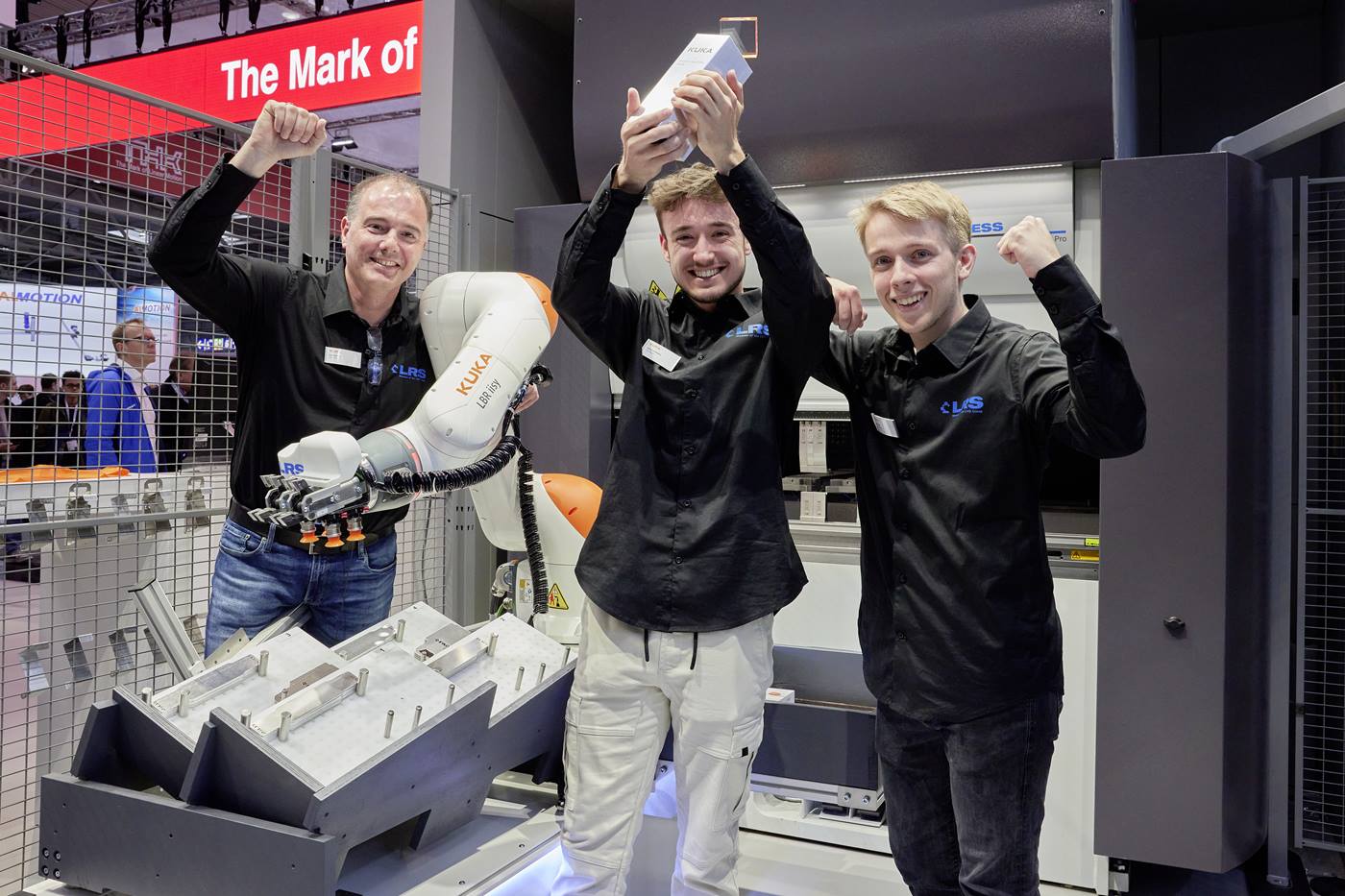
Volker Schmirgel: “Let's take the KUKA Innovation Award as an example. Every year for exactly 10 years, KUKA has offered young talents the opportunity to implement their concepts free of charge with KUKA robotics and present them to the public at a major industrial trade fair. The final teams are accompanied by KUKA experts throughout the competition. The results are truly impressive. The winners of 2022, for example, have now founded a start-up and, in collaboration with KUKA, have brought a robot-based medical device to clinics for the early diagnosis of rheumatoid arthritis. This year's Innovation Award, the final of which took place at the Hannover Messe, was all about robotics for SMEs and craft. These are still very thinly automated areas, and a shortage of skilled workers and demographic change are affecting these sectors. The use of robotics can be very helpful here but is still in its infancy.
The winning team from Belgium impressed the jury with an innovative and user-friendly cobot application with a high degree of maturity for small and medium-sized companies. And we have moved straight on to the next round: the Innovation Award 2025 Medical Robotics Challenge 2.0 is all about innovative concepts for the future of medicine and healthcare. These are also areas that are under great pressure and where the use of modern technologies offers enormous potential.”
At the TIC, you are taking a look into the future of robotics, even beyond traditional industrial production. Which topics are currently at the forefront?
Volker Schmirgel: “The most important topic at the moment is clearly the combination of AI and robotics. There are many facets to this and we currently have a number of research projects to understand what is possible. There are many promising approaches but, to be honest, there are also still many hurdles and limits. One example: In robotics, our goal is absolute reliability and accuracy, especially in industrial production or medical technology. However, AI is still very much in need of testing. In contrast to “classic robotics”, humans must always be involved in a corrective function. But even if we are still at the beginning in many areas: AI together with robotics has incredible potential to become a convincing overall system, with more productivity and easier use.”
Investigating and testing new topics can also mean dead ends and failures. What are your experiences?
Volker Schmirgel: “Of course, there are also topics that are pushed a lot in research, but the market doesn't develop in the same way as the technical possibilities. Just because a technology is convincing in principle doesn't mean that the market is ready for it in practice or that there will be customer interest at a certain point in time. Then you have to accept when things are not accepted in the same way. Sometimes we have thought something through in advance and not pursued it any further, and then years later the applications appear somewhere as a product. I won't go into details now, but it shows: The right timing is important.”
About: Volker Schmirgel began his career at KUKA in 2006 after completing his degree in electrical engineering with a focus on robotics at RWTH Aachen University. During his professional career at KUKA, he was responsible for research and development activities in the field of robotics, including the market launch of the first collaborative robot LBR iiwa and the development of software and hardware for a new robot system for human-robot collaboration. Volker Schmirgel has headed KUKA's Technology and Innovation Center since October 2023.


