"Robotics is indispensable in healthcare today"
It is widely known that KUKA is one of the major players in the manufacture of robots for industry. However, KUKA has also become an established force on the market in the field of robotics for integration into medical products over the past two decades. In this interview, Axel Weber, VP Business Unit Medical Robotics at KUKA, describes the current trends and challenges in medical robotics.
Jonas Micheler
31 ianuarie 2024
Technology
Timp de citire: 2 minute
Axel, for those not yet familiar with KUKA robotics in healthcare, can you please briefly discuss KUKA's role and explain how robotics improves healthcare outcomes?
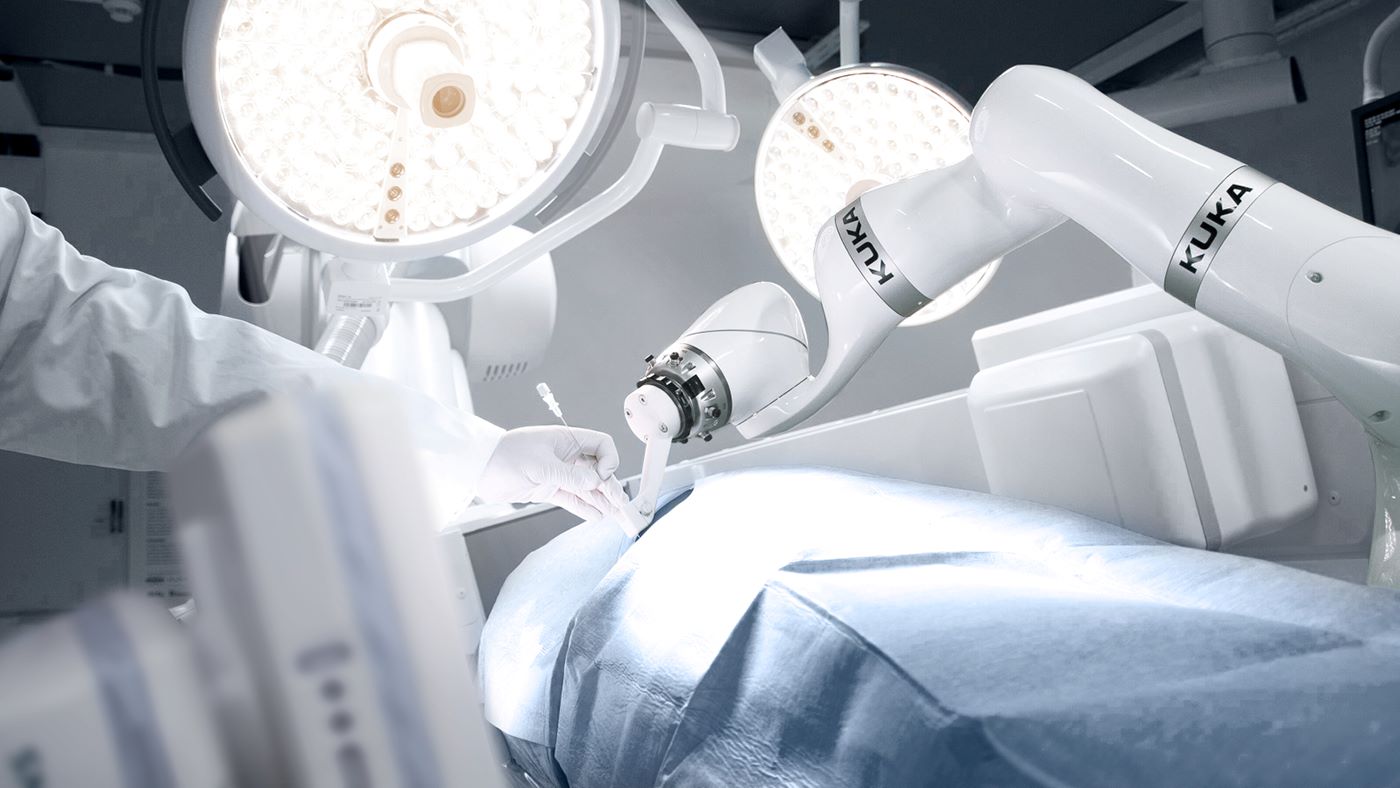
Axel Weber: KUKA is a leading supplier of robotic components for medical devices. At KUKA, we adapt industrially proven robot technology that medical technology companies integrate into their products. An outstanding product in this area is the LBR Med. Medical products in which the LBR Med is used can fulfill a wide range of tasks in the healthcare sector. The sensitive, seven-axis lightweight robot can be flexibly and easily integrated into medical devices for various medical activities.
Axel Weber: KUKA is a leading supplier of robotic components for medical devices. At KUKA, we adapt industrially proven robot technology that medical technology companies integrate into their products. An outstanding product in this area is the LBR Med. Medical products in which the LBR Med is used can fulfill a wide range of tasks in the healthcare sector. The sensitive, seven-axis lightweight robot can be flexibly and easily integrated into medical devices for various medical activities.

With its responsive sensor technology, extensive safety precautions and hygiene-optimized surfaces, the LBR Med is ideally suited for applications in medical technology.
In addition, the robot component simplifies and accelerates product development and approval for medical device manufacturers, as the LBR Med is certified in accordance with the internationally recognized CB scheme. In addition to the LBR Med, KUKA also offers robots with high payloads for transporting heavy medical equipment. Our robots are used in radiotherapy for precise tumor treatments. They can also be found in angiography systems for taking X-ray images.

Does KUKA have any other innovative products in the pipeline that you can talk about?
Axel Weber: With more than two decades of experience in healthcare robotics, our team provides medical device manufacturers with the technology and expertise to help them get to market. With a dedicated R&D department for the medical sector, we are continuously developing our robotics and associated software solutions.
Nevertheless, robot technology is developing rapidly and we are looking for new technologies for the next generations of our robots to increase functionality and adapt even better to our customers' applications. We also need to address cost pressures in the healthcare system and ensure that robot technology is affordable.
Axel Weber: With more than two decades of experience in healthcare robotics, our team provides medical device manufacturers with the technology and expertise to help them get to market. With a dedicated R&D department for the medical sector, we are continuously developing our robotics and associated software solutions.
Nevertheless, robot technology is developing rapidly and we are looking for new technologies for the next generations of our robots to increase functionality and adapt even better to our customers' applications. We also need to address cost pressures in the healthcare system and ensure that robot technology is affordable.
What trend do you recognize in medical robotics? What advantages and benefits can it offer?
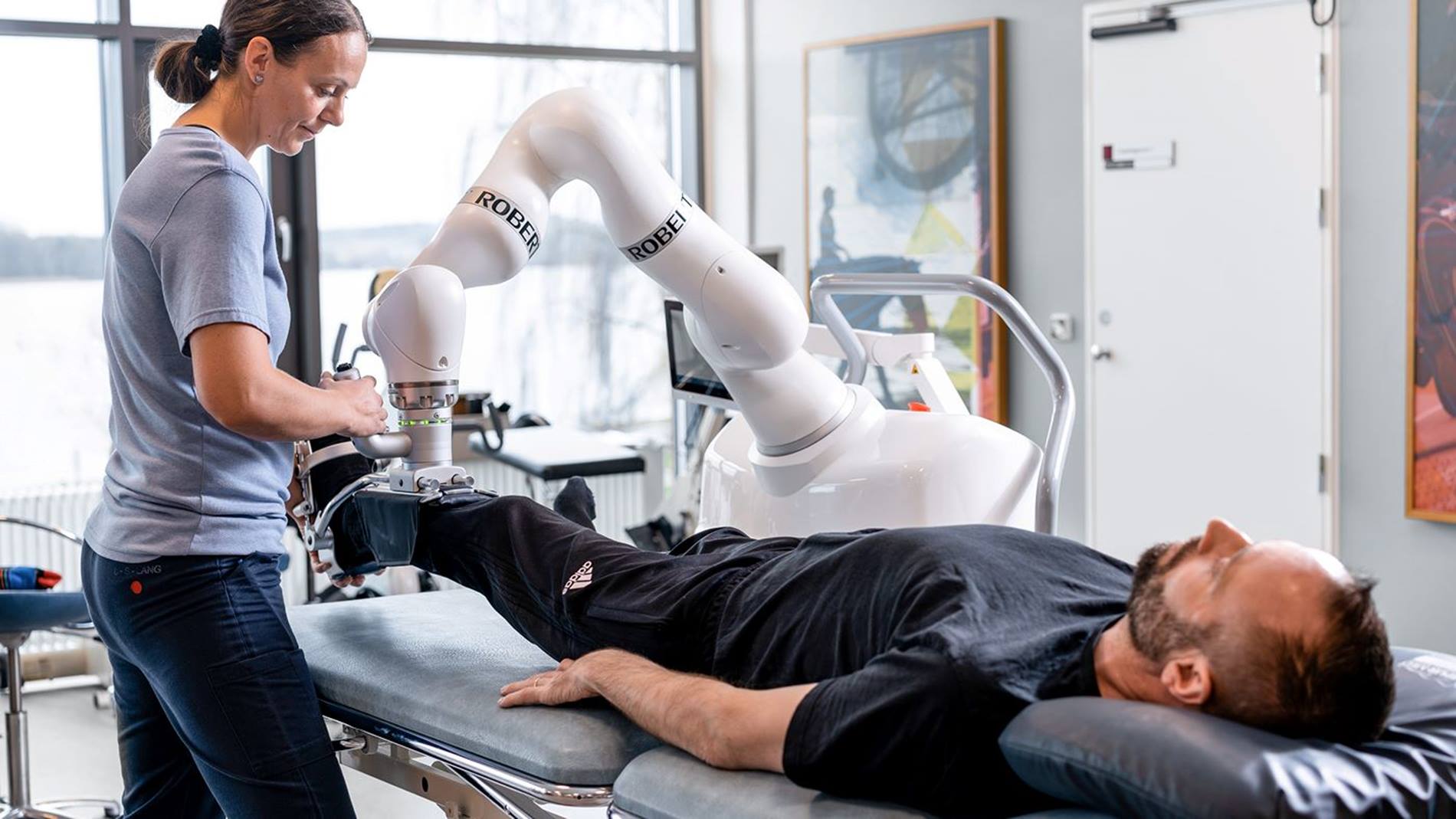
Axel Weber: Robotics has arrived in the healthcare sector and is now indispensable. This applies to everything from diagnostics and surgical procedures on patients to therapy. There are many possible applications: biopsies for brain tumors, teleoperative ultrasound examinations or rehabilitation after accidents or strokes. However, the use of robotics is not yet standard in care. Several medical technology companies offer robotic solutions and the pressure to be competitive in this area is great. Therefore, companies need to focus on the medical application and not on developing a robotic solution from scratch, which would result in high costs and resource requirements. To get to market quickly and offer compelling solutions, they need to work with a provider that can offer them the right robotics and the necessary interfaces for their application.
The use of robotics and AI in healthcare has many advantages. Many medical facilities are facing a shortage of skilled labor, which can negatively impact the quality of diagnosis and treatment of their patients. Robots are not only able to improve the quality of treatments that require the highest precision and innovative technology, they are also more persistent than humans and do not get tired. They can also relieve doctors of monotonous or physically demanding tasks. This way, human doctors or nurses can focus on other patient treatment tasks that require their full attention.
Axel Weber: Robotics has arrived in the healthcare sector and is now indispensable. This applies to everything from diagnostics and surgical procedures on patients to therapy. There are many possible applications: biopsies for brain tumors, teleoperative ultrasound examinations or rehabilitation after accidents or strokes. However, the use of robotics is not yet standard in care. Several medical technology companies offer robotic solutions and the pressure to be competitive in this area is great. Therefore, companies need to focus on the medical application and not on developing a robotic solution from scratch, which would result in high costs and resource requirements. To get to market quickly and offer compelling solutions, they need to work with a provider that can offer them the right robotics and the necessary interfaces for their application.
The use of robotics and AI in healthcare has many advantages. Many medical facilities are facing a shortage of skilled labor, which can negatively impact the quality of diagnosis and treatment of their patients. Robots are not only able to improve the quality of treatments that require the highest precision and innovative technology, they are also more persistent than humans and do not get tired. They can also relieve doctors of monotonous or physically demanding tasks. This way, human doctors or nurses can focus on other patient treatment tasks that require their full attention.

Are there any current challenges in the field of medical robotics?
Axel Weber: A current challenge in the field of medical robotics is the increasing cost pressure in global healthcare systems. Many robot-based systems for diagnostics and therapy require high levels of investment in order to be brought to market maturity. Added to this is the regulatory framework, which varies from country to country. Medical technology companies cannot concentrate on building a robotic solution for one application. A robotic platform must be able to serve multiple applications - which requires more generic robotic technologies on the one hand and really highly specialized variants of these technologies on the other.
Axel Weber: A current challenge in the field of medical robotics is the increasing cost pressure in global healthcare systems. Many robot-based systems for diagnostics and therapy require high levels of investment in order to be brought to market maturity. Added to this is the regulatory framework, which varies from country to country. Medical technology companies cannot concentrate on building a robotic solution for one application. A robotic platform must be able to serve multiple applications - which requires more generic robotic technologies on the one hand and really highly specialized variants of these technologies on the other.
How will medical robotics develop over the next ten years?
Axel Weber: In particular, the combination of medical robotics with AI will gradually produce more autonomous solutions to improve patient treatment. In addition, robotics in the healthcare sector will increasingly become a commodity. This will lead to a push into areas where robotics is urgently needed but is currently still of little importance. A good example is the field of geriatric care.
Axel Weber: In particular, the combination of medical robotics with AI will gradually produce more autonomous solutions to improve patient treatment. In addition, robotics in the healthcare sector will increasingly become a commodity. This will lead to a push into areas where robotics is urgently needed but is currently still of little importance. A good example is the field of geriatric care.