<sub id="for6y"><s id="for6y"><form id="for6y"></form></s></sub>

    <cite id="for6y"></cite>

        <s id="for6y"></s>
        亚洲一品道一区二区三区,国产无套粉嫩白浆在线,51妺嘿嘿午夜福利,人人妻人人澡人人爽人人精品av,欧美一区二区三区欧美日韩亚洲,欧美一本大道香蕉综合视频 ,884aa四虎影成人精品,国产精品久久久久久福利69堂

        Wybierz swoj? lokalizacj?:

        Lokalizacja

        AI in robotics: from robot simulation to grip quality

        With ChatGPT, the topic of Artificial Intelligence (AI) has become socially relevant in a very short space of time. Research has been conducted in the industry for several years: Where is the potential for the use of AI in mechanical engineering? What specific fields of application are there for the combination of automation and AI? KUKA provides an insight into the current status.


        Ulrike G?tz
        27 marca 2024
        Technology
        Przeczytasz ten artyku? w: 3 minut

        KUKA utilises artificial intelligence in its own products and solutions. Above all this, there is always one fundamental goal: to make access to automation as easy as possible for our customers. In the future, artificial intelligence will make a major contribution to this. 

        We will show you two applications:

        Test in the simulation what would still be too delicate on the robot controller

        A team at KUKA is currently working on using AI to support the creation of programming code. Generative AI is being used for this purpose. In the long term, AI is even intended to supplement the classic input that is currently made via the KUKA smartPAD. It would then be possible for end users to give so-called prompts, i.e. text input such as questions or in everyday language, directly to the AI. The AI then creates the code to programme the robot for the task in question.

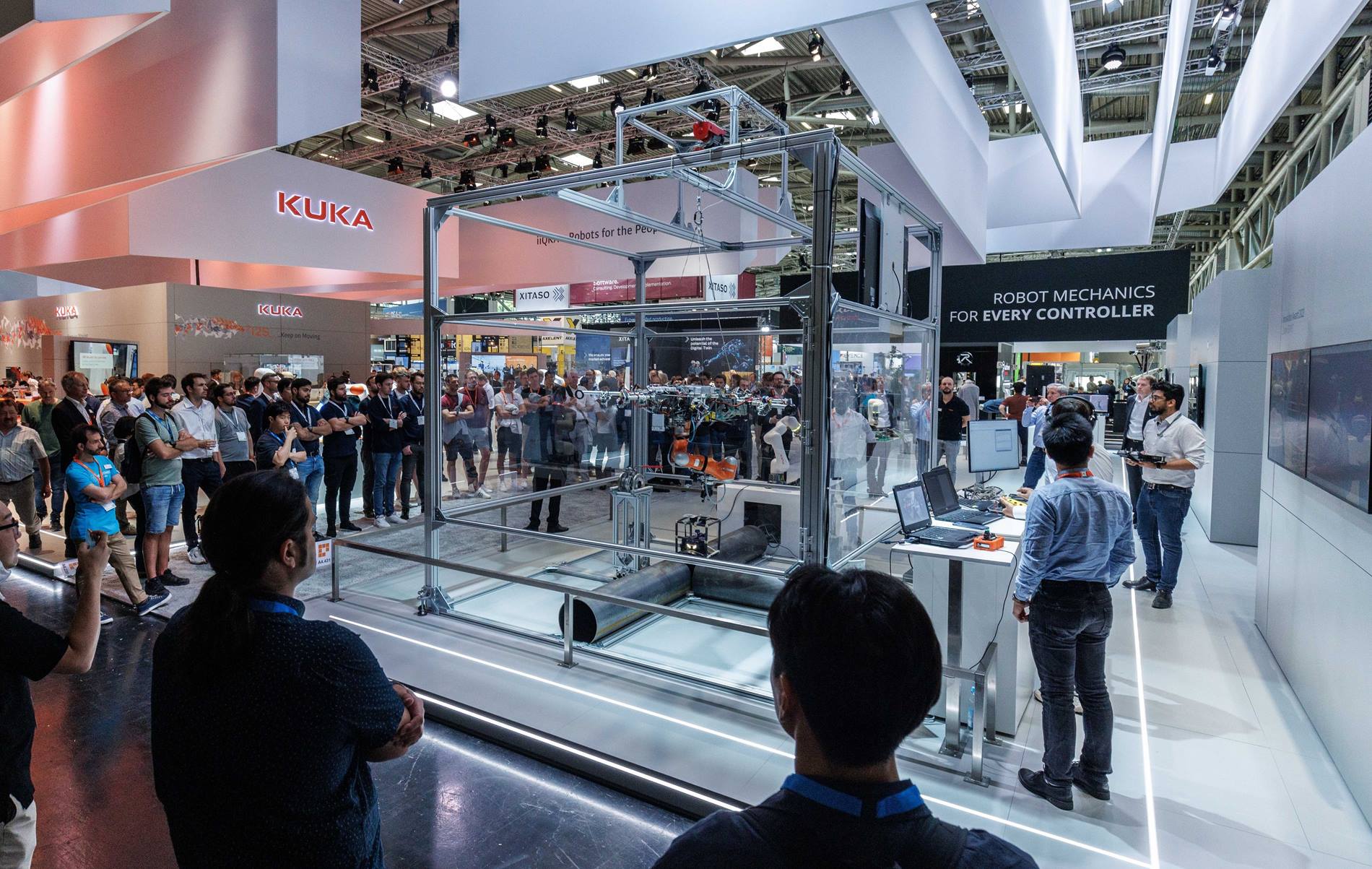
        At the Hannover Fair, KUKA will be demonstrating how artificial intelligence creates the KUKA programming code at the Microsoft booth.

        What is currently being created here is a KRL chatbot. However, it would still be too dangerous to test AI-generated programme code directly on the robot controller. The entire industry agrees on this. It therefore makes sense to use the simulation environment for precisely this purpose. Such developments can be ideally tested with a digital twin - even if the AI code still contains logic errors and the robot simply continues to move despite a stop command. A collision in the simulated environment is much easier to deal with

        One day, however, this will change and AI will be able to programme much more reliably than humans and even react confidently to incorrect inputs. These models will then be transferred to the real world and take on tasks as AI assistants

        Improve handle quality: AI in Swisslog's ItemPiQ

        On average, customers have 8,000 - 10,000 different products in their product ranges - be it food groups or companies from the pharmaceutical industry, from fashion and clothing to electronics and fast-moving consumer goods through to food and beverages. It is obvious that the packaging for such product ranges varies greatly: Large and small cartons, bags or individual plastic bottles.

        Every day, these different items have to be picked, i.e. put together for a customer or delivery order. This is done fully automatically with Swisslog's
        ItemPiQ. ItemPiQ is an AI and camera-supported item picking robot. It can change its gripper autonomously and thus adapt to the different types of packaging.

        Swisslog has been working for some time on improving gripping quality with the help of AI models. At Swisslog, there are three ways of training and improving AI models:

        • Using existing data that is publicly accessible within the community and available for general use.
        • Typical customer data that has been artificially generated based on the Swisslog experience.
        • Fine-tuning with real customer data.


        AI support will enable image-based robotic systems to work even more accurately and efficiently in the future. 

        What can AI optimise with ItemPiQ?

        On the one hand, the aim is to have a more stable grip, i.e. to increase the picking quality.

        Then ItemPiQ should also be taught a certain amount of intelligence. The system should know which items it is currently picking - to prevent it from picking the wrong items or mistaking a piece of cardboard in the box for a product. In AI-speak, this refers to the field of "context awareness".
        AI support naturally lends itself to image-based robot systems. The only question that currently remains is: how do I allow such systems to continue learning? In summer, the customer probably has a lot of products in bags, in winter in boxes. So how do you ensure that the AI doesn't forget how the gripper on the robot arm has to grip boxes in winter? This topic of "model updates" is currently still on many people's minds.

        Nevertheless, it will soon be time to put the AI models into practice. After all, a laboratory environment always differs from the real world.

        All-rounder artificial intelligence?

        On the opportunities and limits of artificial intelligence

        Nast?pny artyku?

        To mo?e Ci? równie? zainteresowa?

        主站蜘蛛池模板: 精品视频在线观看免费观看| 99riav精品免费视频观看| 影音先锋男人站| 精品国产午夜理论片不卡| 日韩亚洲欧美中文高清| 国产成人AV无码永久免费一线天 | 成人aV毛片| 亚洲AV电影不卡在线观看| 欧洲熟妇色xxxx欧美老妇免费| 亚洲人黑人一区二区三区| 久久se精品一区精品二区| 全免费又大粗又黄又爽少妇片| 日韩有码中文字幕国产| 亚洲性美女一区二区三区| 污视频网站免费观看| 亚洲国产制服丝袜 | 七区久久| 亚洲精品日韩中文字幕久久久| 强插少妇视频一区二区三区| 欧美性色19p| 成人黄网站网址在线播放| 激情网页| 日本中文一二区有码在线| 亚洲AV熟女| 得荣县| 东京热av无码电影一区二区| 日本肉体xxxx裸交| 国产熟女少妇| 国内精品久久人妻互换| 国产精品制度丝袜电影| 国产SM重味一区二区三区| 中文字幕亚洲区| 久久精品国产亚洲一级二级| 精品国产中文字幕懂色| 天堂网中文字幕| 麻豆91蜜桃一区乱码| 人妻少妇乱子伦精品| 国产乱码一区二区三区免费| 天天综合网色中文字幕| 成人三级精品| 久久精品免费自拍视频|