<sub id="for6y"><s id="for6y"><form id="for6y"></form></s></sub>

    <cite id="for6y"></cite>

        <s id="for6y"></s>
        亚洲一品道一区二区三区,国产无套粉嫩白浆在线,51妺嘿嘿午夜福利,人人妻人人澡人人爽人人精品av,欧美一区二区三区欧美日韩亚洲,欧美一本大道香蕉综合视频 ,884aa四虎影成人精品,国产精品久久久久久福利69堂

        Select your location:

        Location

        Select your language:

        collaborative-cobot-used-for-assembly-on-the-assembly-line

        More efficiency through Assembly in Motion

        With Assembly in Motion, KUKA automates automotive manufacturers new areas in final assembly.


        Automotive manufacturers are looking for solutions to increase the efficiency of assembly in motion. Assembly in motion has so far been built for assembly operations by humans. In order to increase the automation level, innovative automation solutions must be developed in which humans and robots share the workstation in the tightest of spaces. Some assembly tasks with recurring process steps, such as gap measurement, tire or trunk lid assembly, as well as the assembly of windshields or the roof, can be easily automated. The challenge, however, lies in the implementation of safe human-robot collaboration applications in which the robots adapt to the speeds of the conveyor systems and synchronize themselves.

        Increasing efficiency on the assembly line

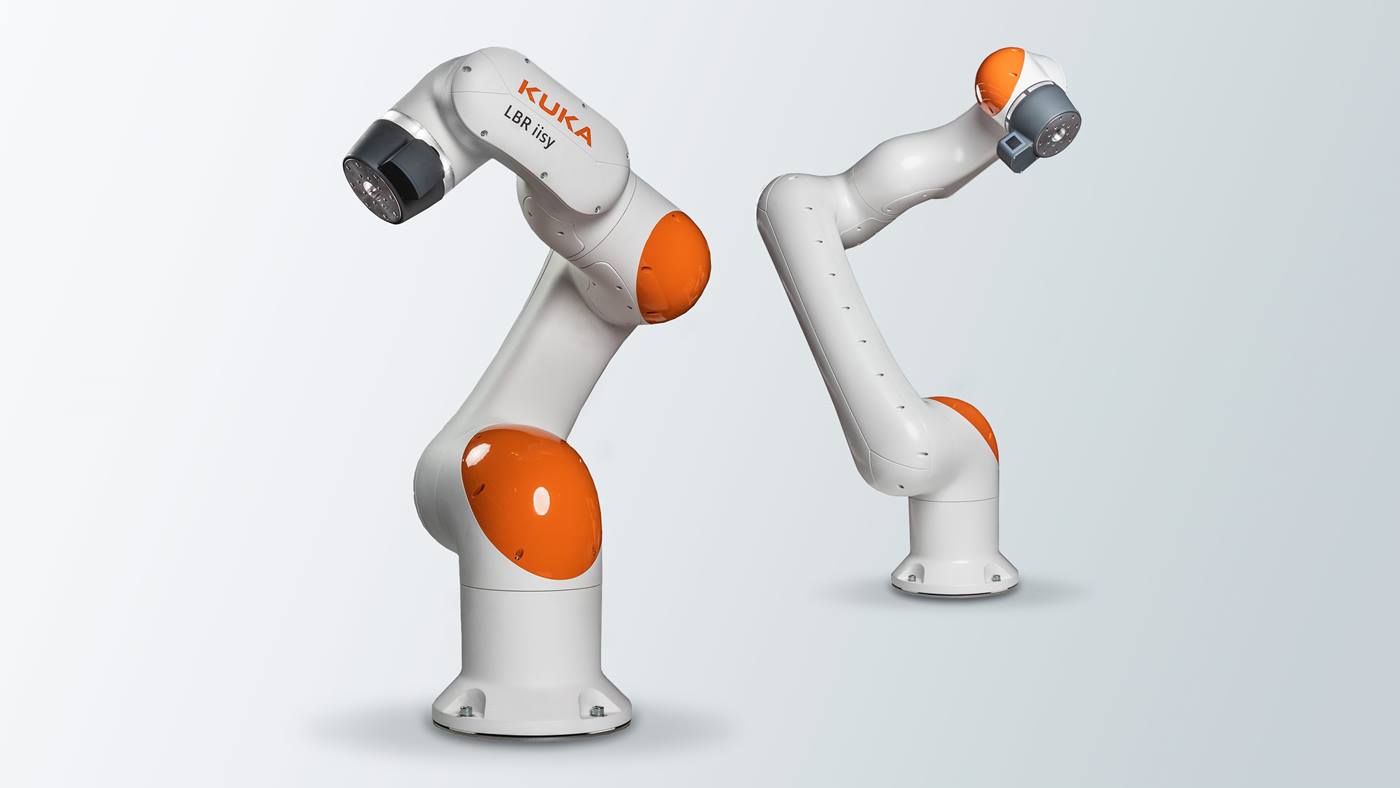
        The assembly lines in the production halls of automotive manufacturers move partially assembled car bodies along the processing lines, while workers assemble other parts or check quality features in cycle time operation. The speed of the assembly line is adapted to the human pace so that assembly tasks or reworking of components can be carried out on the running line. To increase efficiency on the assembly line, human and robot must cooperate. The sensitive lightweight robot KUKA LBR iiwa is ideally qualified for this purpose, since it meets the highest safety requirements and can react immediately to any touch by the worker and adapt to the situation.

        The rounded design of the intelligent work assistant KUKA LBR iiwa, its sensitive characteristics and its collision detection system ensure safe operation in direct cooperation with the human operator, without the need for a safety fence.

        Christian Landherr, Head of Final Assembly & Paintshop at KUKA

        Assembly line and robot are synchronized

        In order to provide the workers with additional space for movement, the 7-axis robot arms are mounted on a safe retraction fixture. In the event of a fault, the human operator can thus easily push the lightweight robot aside. "In addition, the sensitivity of the cobot allows flexible use in motion operation, as it compensates for tolerances," says Landherr. An assembly line does not run one hundred percent consistently. Delays or even stops occur time and again because manual intervention is necessary. In the standard automation process, robots must be recalibrated when they stop before they resume their activity. This is not the case with the KUKA LBR iiwa.

        Sensitive lightweight robot KUKA LBR iiwa

        The intelligent control software from KUKA enables the lightweight robot to maintain a constant connection to the assembly line or the assembly carriages, and thus to obtain precise information about their speed and position. The control software transmits the acquired data on the exact position and speed of the assembly carriage on the assembly line directly to the lightweight robots. Using this information, the sensitive robots can dynamically adapt their activities to the motion operation.

        “The measurements are carried out relative to the component. This enables the robot to carry out its measuring task completely autonomously in motion operation.“, explains Otmar Honsberg, Head of Application Engineering at KUKA. “In contrast to conventional robot-based measurement, this is a real benefit." In combination with optical detection and its haptic sensor technology, the sensitive KUKA LBR iiwa automatically adapts to new conditions in the event of belt vibrations or stops and continues its work seamlessly. 


        The "Assembly in Motion" solution makes the robot an intelligent positioning unit for the measuring device.

        Otmar Honsberg, Head of Application Engineering at KUKA

        Maximum performance in the tightest space

        At one workstation, for example, two to four robots can simultaneously measure and inspect the gap dimensions and flush-mounting of body components, such as between the tailgate and side panel or between the headlights and hood, while workers simultaneously perform further quality tests on the body. On request, measuring heads can be integrated into the application, which can also measure the exact gap dimension on transparent materials such as glass or plastic, for example, in the front headlight area using laser technology.

        Quick and easy station expansion

        Another advantage of the sensitive “Assembly in Motion” solution compared to measurement applications with conventional industrial robots is the maximum reduction in space requirements. Industrial robots take up considerably more space due to the necessary safety equipment. With the sensitive lightweight robot KUKA LBR iiwa, on the other hand, human operators can work safely in the tightest of spaces within the same work area. Moreover, unlike the integration of other industrial robots, the re-configuration options and small footprint of the lightweight robot mean that station expansions during measurement operation can be carried out quickly and easily at a later time.

        collaborative-cobot-used-for-assembly-on-the-assembly-line
        Gap measurement in motion operation with the sensitive lightweight robot KUKA LBR iiwa

        Process know-how allows intelligent data analysis

        The result of a gap measuring station with "Assembly in Motion" technology, are reliable measured values on a moving car body - and thus a significant gain in efficiency compared to previous often manual measurements. In the future, automated measuring stations in motion operation will even allow early conclusions to be drawn about possible errors in production: "If the robots measure changes in the gap dimensions, they can independently point out possible causes with the correspondingly defined process logistics," says Honsberg. For example, premature machine wear or incorrect settings in production could be detected before they have an impact on the production process. "With our extensive process know-how, we are able to sensibly evaluate the large amount of data that accumulates in automated assembly and react in a forward-looking manner."

        Find KUKA system partners in your area

        Find the right partner for your industry or specific challenge here.

        主站蜘蛛池模板: 欧美日韩在线看| 亚洲精品国产一二三区| 丹凤县| 91精品国产综合久久精品| 老熟女重囗味hdxx69| 成人免费亚洲av在线| 国产精品推荐天天看天天爽| 丰满人妻被猛烈进入| 无码国产偷倩在线播放| 精品国产人妻一区二区三区| 久久99久久99精品免视看动漫 | 中文乱字幕视频一区| 一本色道久久综合精品婷婷| 欧美日韩国产高清视频在线观看| 精品无码国产不卡在线观看| 国产成人a在线观看网站站| 精品女同一区二区三区免费站| 欧美乱人伦人妻中文字幕| 久热这里有精品视频在线| 日产精品久久久久久久蜜臀| 久久综合九色综合欧洲98| 自拍偷自拍亚洲精品偷一| 久久久久香蕉国产线看观看伊| 亚洲国产精彩中文乱码av| 黄色免费在线网址| 俺也来国产精品欧美在线观看| 精品免费国产一区二区三区四区介绍| 人妻有码av中文字幕久久琪| 亚洲精品一品区二品区三品区| 我被公睡做舒服爽中文字幕| 天堂无码| 精品亚洲精品日韩精品| 国产麻豆va精品视频| 亚洲人成网线在线播放不卡| 国内精品一区二区在线观看| 2021亚洲国产精品无码| 亚洲精品乱码久久久久| 干老熟女干老穴干老女人| 无码一区二区三区网站| 免费萌白酱国产一区二区三区| 成人激情视频一区二区三区|